Loading…

Registration opens August 15th at www.idwsds.org.
Type: Keynote Session clear filter
Tuesday, October 6
 

01:00 UTC

K1 - A Statistician in the Loop: Building a Career in Trustworthy AI
Tuesday October 6, 2026 01:00 - 02:00 UTC
Statistics provides tools for answering questions that are central to building trustworthy AI: What works? What fails? How certain are we? In this talk, I will discuss my path from studying statistics to conducting research as a data scientist and now working full time in AI safety. I will share examples of how statistical thinking can support this work, including deciding what to measure, uncovering failure modes, quantifying uncertainty, and connecting evidence to real decisions. I hope to show that many paths lead into this field and that statisticians and data scientists have important skills to bring to the challenge of building trustworthy AI.
Speakers
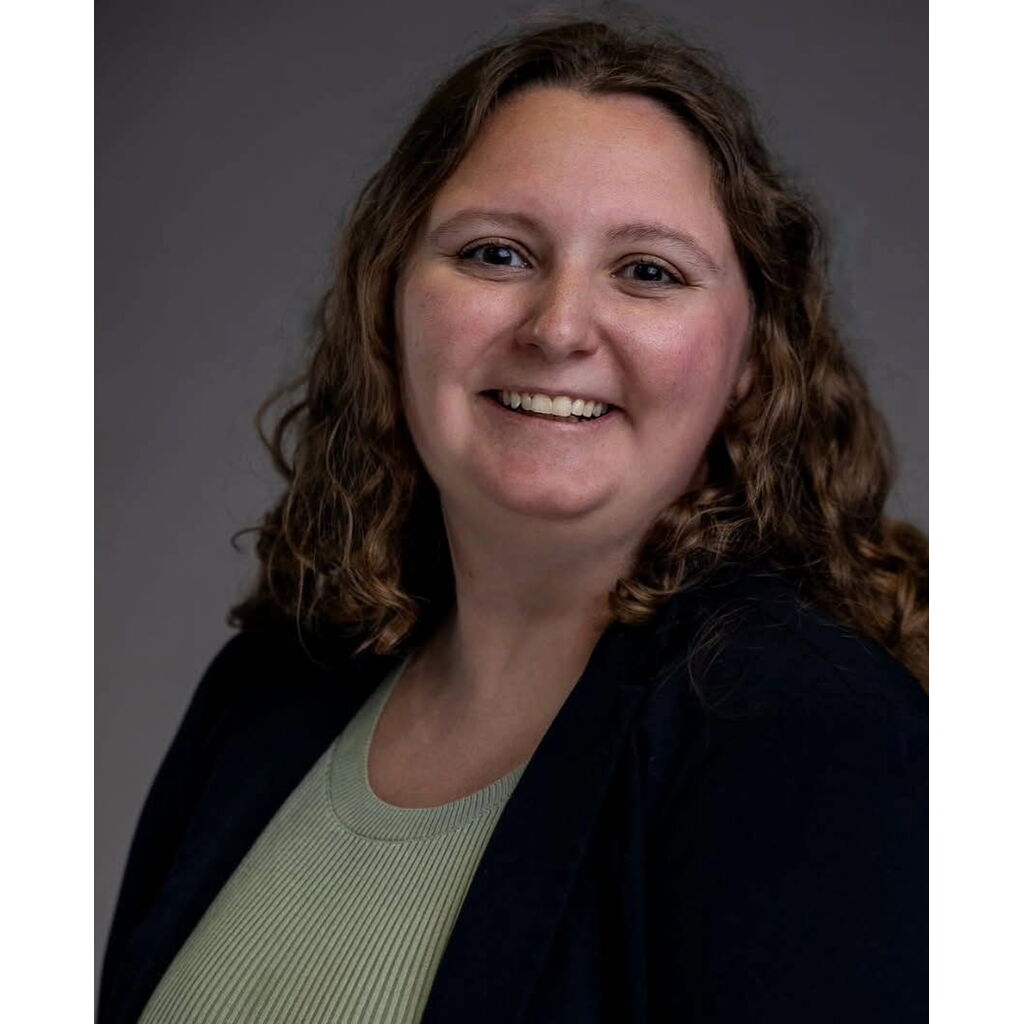
avatar for Emily Hadley

Emily Hadley

Quantitative Threat Forecasting Analyst, OpenAI
Emily Hadley is a Quantitative Threat Forecasting Analyst at OpenAI, where she works to identify, understand, and forecast risks related to AI. Previously, she was a Security Researcher on the Microsoft AI Red Team and a Senior Research Data Scientist at RTI International. Emily holds... Read More →
Organizers
Tuesday October 6, 2026 01:00 - 02:00 UTC
Zoom Room #1
  Keynote Session

06:00 UTC

K2 - Bayes in Practice: A Bayesian Cancer Atlas
Tuesday October 6, 2026 06:00 - 07:00 UTC
From its earliest beginnings, Bayesian statistics has been a synthesis of theory, methodology, computation and application. In this presentation, I will reflect on the development of the award-winning Australian Cancer Atlas (https://atlas.cancer.org.au/) and spotlight its Bayesian foundations. I will highlight some of the challenges and proposed solutions to modelling and visualisation of an awkward spatial geography, “filling in” missing covariates, and communicating uncertainty. I will also touch on new research directions inspired by the Atlas: new spatio-temporal models, spatial vulnerability indices, meta-analysis transfer learning, distributed AI and responsible data science. Importantly, these methodological discussions will be complemented by reflections on the impact of the work for patients, health practitioners, cancer support groups and government agencies. Bayesian statistics really can make a difference!
Selected References

Baade P, K Mengersen [2024] Building HOPE through the Australian Cancer Atlas Insight+ MJA 35  //insightplus.mja.com.au/2024/35

J Bon, A Bretherton, K Buchhorn, S Cramb, C Drovandi, C Hassan, A Jenner, H Mayfield, J. McGree, K Mengersen, A Price, R Salomone, E Santos-Fernandez, J Vercelloni & X Wang, [2023] Being Bayesian in the 2020s: opportunities and challenges in the practice of modern applied Bayesian statistics. Philosophical Transactions. Series A, Mathematical, physical, and engineering sciences, 381(2247), Article number: 20220156.

Bretherton A, Bon J, Warne D, Mengersen K, Drovandi C, [2026] A Principled Approach to Bayesian Transfer Learning, Bayesian Analysis. To appear.

Cramb SM, K Mengersen, and PD Baade. [2011] Developing the atlas of cancer in Queensland: methodological issues. International Journal of Health Geographics, 10, p 1-11, 2011

Goodwin S,  T Saunders, J Aitken, P Baade, U Chandrasiri, D Cook, S Cramb, E Duncan, S Kobakian, J. Roberts, K. Mengersen, [2024] Designing the Australian Cancer Atlas: visualizing geostatistical model uncertainty for multiple audiences.  JAMIA. Journal of the American Medical Informatics Association, //doi.org/10.1093/jamia/ocae212

Hassan, C [2024] Structured Models and Algorithms for Sensitive Data. PhD Thesis, Queensland University of Technology, Australia.

Hogg J, J Cameron, S Cramb, P Baade, K Mengersen [2024]  A Two‐stage Bayesian Small Area Estimation Approach for Proportions.  International Statistical Review. V92 I3 455482.

Hyland-Wood B, Snoswell A, Sandeep R, Chun O, Perrin D, Fielt E, Price A, Mengersen K (2024) Response to proposals paper on introducing mandatory guardrails for AI in highrisk settings. Analysis and Policy Observatory, 2024/10/4

Jahan F, Duncan E, Cramb S, Baade P, Mengersen K, [2020] Multivariate Bayesian metaanalysis: Joint modelling of multiple cancer types using summary statistics, International Journal of Health Geographics, 19 (1)

Leontyeva Y, Y Huang, S Cramb, J Cameron, P Baade, K Mengersen, et al. [2025] Bayesian Spatial Relative Survival Model to Estimate the Loss in Life Expectancy and Crude Probability of Death for Cancer Patients, Statistics in Medicine 44 (3–4), e10287

Price A, M Rigby, P Fiévez, K Mengersen [2025] A spatial vulnerability index for environmental health Ecological Indicators Vol 178, September 2025, 113793 

Speakers Organizers
Tuesday October 6, 2026 06:00 - 07:00 UTC
Zoom Room #1
  Keynote Session

11:00 UTC

K3
Tuesday October 6, 2026 11:00 - 12:00 UTC

Speakers
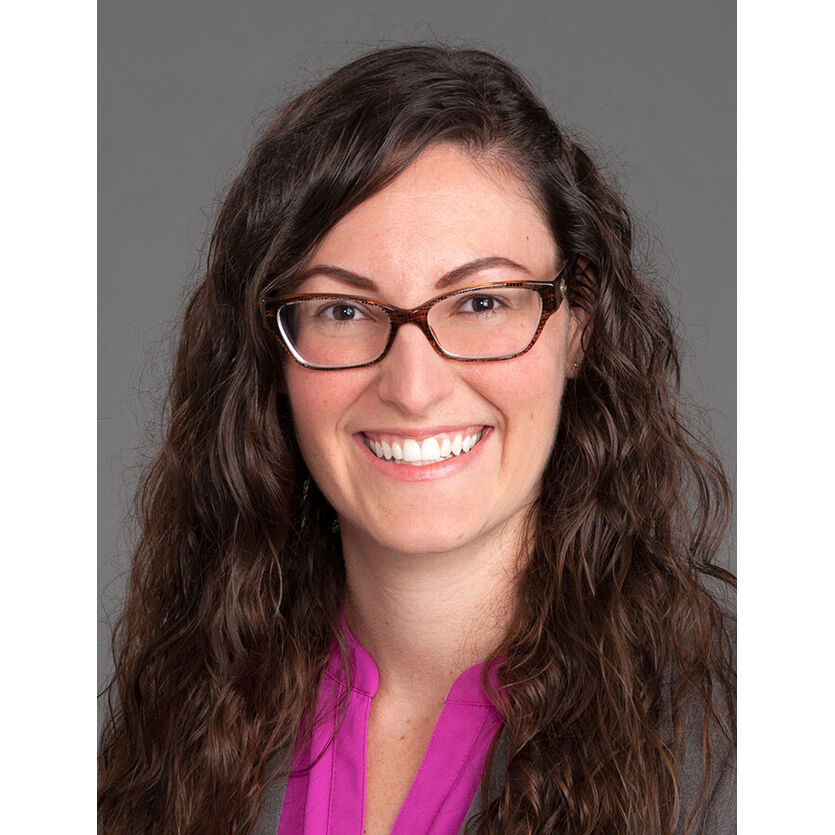
avatar for Dootika Vats

Dootika Vats

Department of Statistics and Data Science, IIT Kanpur

Organizers
Tuesday October 6, 2026 11:00 - 12:00 UTC
Zoom Room #1
  Keynote Session

16:00 UTC

K4
Tuesday October 6, 2026 16:00 - 17:00 UTC

Speakers
avatar for Diana Šimić

Diana Šimić

Retired Full Professor

Organizers
Tuesday October 6, 2026 16:00 - 17:00 UTC
Zoom Room #1
  Keynote Session

19:00 UTC

K5
Tuesday October 6, 2026 19:00 - 20:00 UTC

Speakers Organizers
Tuesday October 6, 2026 19:00 - 20:00 UTC
Zoom Room #1
  Keynote Session

23:00 UTC

K6 - Connecting Cure Models and Women’s Health: Survival Analysis for Uterine Cancer Data
Tuesday October 6, 2026 23:00 - Wednesday October 7, 2026 00:00 UTC
Survival analysis plays a fundamental role in health research, especially when the objective is to understand not only the time until an event occurs, but also the possibility that a proportion of individuals may never experience that event. This
situation is particularly relevant in cancer studies, where long-term survivors may be considered cured or no longer susceptible to recurrence or death related to the disease.

In this talk, I will present statistical modeling approaches based on cure models, with emphasis on their application to uterine cancer data. The discussion is motivated by my work on regression modeling for cure factors using the reparametrized defective generalized Gompertz distribution. This framework allows the estimation of both survival behavior and cure proportions, providing a flexible tool for analyzing time-to-event data in the presence of a cured fraction.

The presentation will highlight how cure models can contribute to women’s health research by identifying factors associated with long-term survival and by offering interpretable measures for clinical and epidemiological studies. By connecting statistical theory, survival analysis, and real health data, this work illustrates how statistical science can support evidence-based understanding of cancer outcomes and strengthen global connections between data science and public health.
Speakers
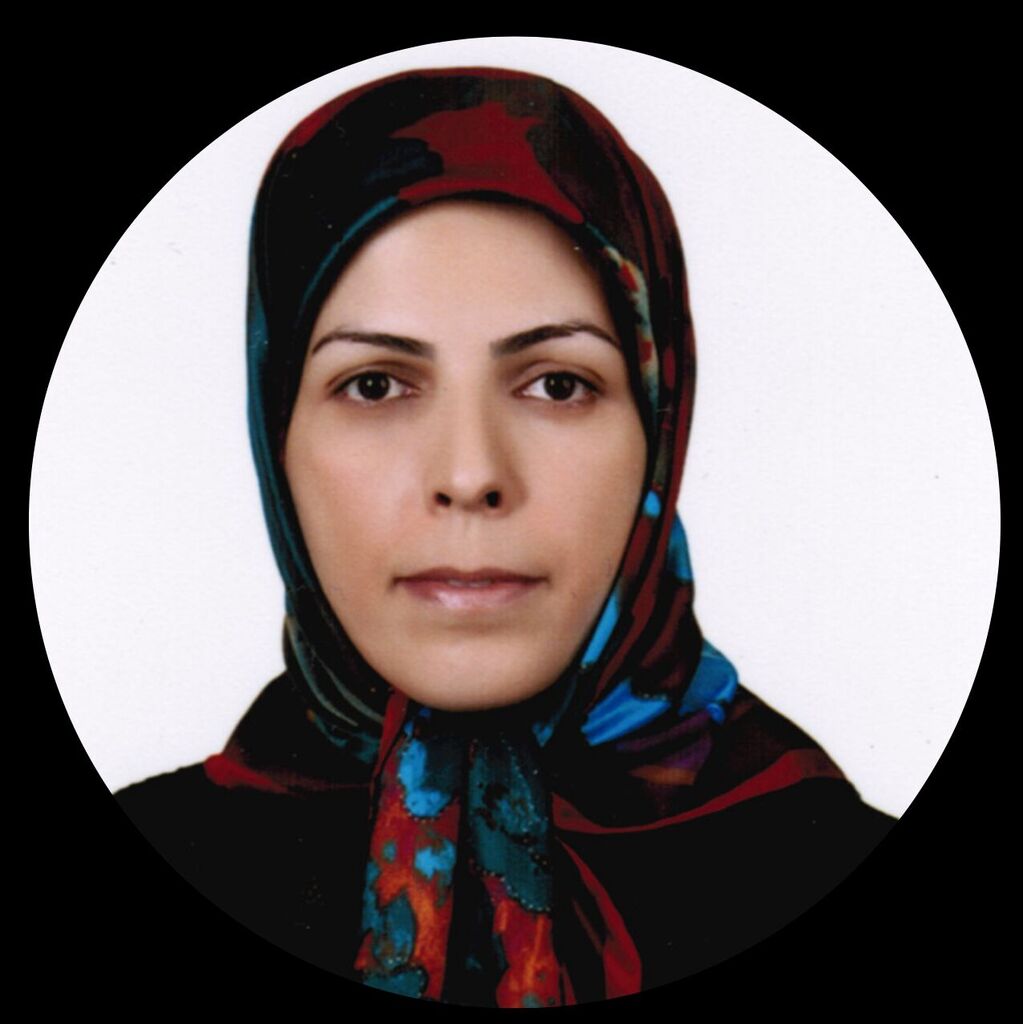
avatar for Vera Tomazella

Vera Tomazella

Universidade Federal de São Carlos
Professor Vera Lucia Damasceno Tomazella is a Full Professor and Senior Professor at the Federal University of São Carlos (UFSCar), Brazil, affiliated with the Department of Statistics. She holds a degree in Mathematics from the Federal
University of Maranhão, a Master’s degre... Read More →
Organizers
Tuesday October 6, 2026 23:00 - Wednesday October 7, 2026 00:00 UTC
Zoom Room #1
  Keynote Session
 
  • Filter By Date
  • Filter By Venue
  • Filter By Type
  • Country
  • Session ID
  • Timezone


Share Modal

Share this link via

Or copy link

Filter sessions
Apply filters to sessions.